Intarsia
-is specifically applied to a type of inlaying probably developed in Siena, Italy, in the 13th C. Intarsia is properly a form of wood inlaying. Inlaying is a process of ornamenting a surface by setting into it material of different color or substance.
Inlay is employed in connection with a great variety of objects, both of major architectural character and of minor furnishing and decorative function, and makes use of a wide range of materials, such as wood, stone, ivory, glass, metal, mother-of-pearl, and tortoiseshell.
Inlays of solid wood or veneer should match the original thickness, the cut, and the grain pattern of the wood. Marquetry is a veneer style that employs different wood veneers to create a design or pattern.
Inlay is employed in connection with a great variety of objects, both of major architectural character and of minor furnishing and decorative function, and makes use of a wide range of materials, such as wood, stone, ivory, glass, metal, mother-of-pearl, and tortoiseshell.
Inlays of solid wood or veneer should match the original thickness, the cut, and the grain pattern of the wood. Marquetry is a veneer style that employs different wood veneers to create a design or pattern.
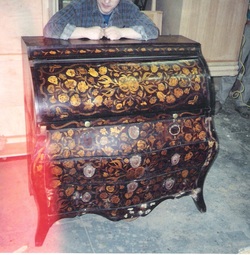 The 18th Century Cylinder Secretary Desk had lots of missing and loose marquetry, and the cylinder top was not working properly.
Humidity treatment was used to straighten out the car-case to allow the cylinder top to roll again. |
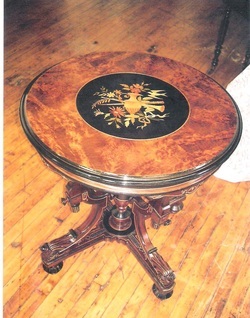 The Eastlake Style Table was damaged by water that made the inlays loose.
|
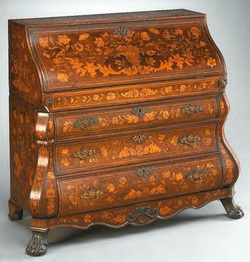 The 18th Century Dutch Marquetry Secretary Desk had lots of missing and loose marquetry.
|
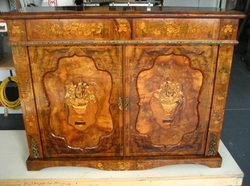 On this Walnut Inlaid Floral Decoration Credenza none of the doors worked properly. It had lots of missing and loose veneers, lots of cracks on the sides and on the doors. |
After the repair, all the furniture were cleaned, touched-up, and French polished.
